

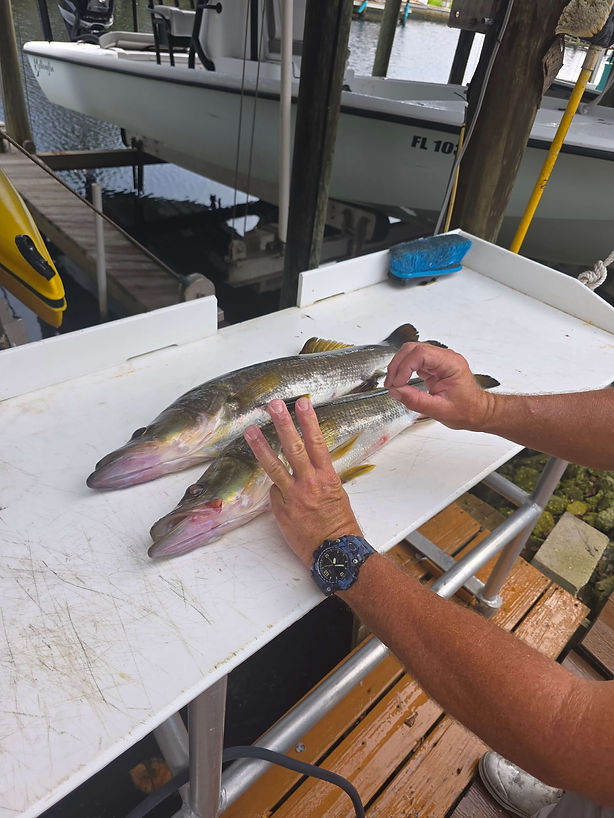
Where Snook Hold in Tampa Bay
Snook are ambush predators built for structure, not open water. Mangrove shorelines, dock pilings, bridge structure, and the passes connecting the bay to the Gulf are all classic snook territory.
They want structure and current together. A dock piling or a mangrove root system with tidal flow moving past it is exactly the kind of spot that holds a snook waiting for an easy meal.
Passes are especially productive during tidal movement, since snook will stage on the edges of the current to intercept baitfish getting pushed through with the tide.

Snook Season and Regulations
Snook season on the Gulf coast is open March 1 through April 30 and September 1 through November 30. It closes December 1 through the end of February and again May 1 through August 31. No commercial harvest or sale of snook is permitted at any time, regardless of season.
Regardless of season, a lot of snook fishing on Tampa Bay charters is catch, photo, and release by choice. The fight is as much the draw as anything that ends up on ice.
Snook also carry a slot limit when harvest is legal, which is one more reason most trips treat it as a release fishery first and a keeper fishery second.

Light Tackle, Technical Fishing
Snook fishing rewards precision more than power. A cast that lands a foot off the target structure gets a follow at best; a cast tight to the piling or the mangrove root gets a strike.
It's close-quarters fishing. The strike zone is often a few feet of structure, which means presentation matters as much as the bait or lure on the end of the line.
The fight typically includes a hard first run straight back toward the structure the fish just came out of, which is exactly what gives snook their reputation among anglers who've tangled with a few.
Best Time of Year for Snook
Snook are cold-sensitive, and they move to deeper, more protected water when temperatures drop in winter.
As water warms through spring and into summer, they push back onto the flats, into the passes, and tight to shoreline structure, which is when the bite really turns on.
Summer heat and higher water temperatures tend to line up with the most consistent snook action of the year.
What Makes Tampa Bay Snook Water Different
Tampa Bay's mix of mangrove shoreline, bridge structure, and passes gives snook more options than a lot of other Gulf Coast fisheries, which is part of why they're such a consistent target here.
The bay's size also means there's usually a protected pocket of structure holding fish even when wind or weather rules out fishing more exposed water elsewhere.
That variety also means a snook trip can adapt to the day. If the passes are blown out, there's usually a mangrove shoreline nearby that's still fishable.
Water clarity varies block to block within the bay depending on rain and runoff, so having options matters more for snook than for a species that only lives in one type of water.
Approaching Structure Without Spooking Fish
Snook holding tight to a piling or a mangrove root are sensitive to noise and boat wake, more so than a redfish working open flats.
A quiet approach on the trolling motor, positioning the boat so a cast can drop naturally along the structure rather than across it, makes a real difference in how many fish actually commit to a bait.
This is part of why snook fishing rewards repetition. Working a stretch of shoreline methodically, structure by structure, produces more consistently than covering the same amount of water quickly.
What Trip Gets You There
Snook show up on both our Inshore Charter Trips ($600) and Nearshore Charter Trip ($850), depending on where the bite is best that week and how far you're willing to run to find it.